

For the second time in a week, I learned about another detention death in front of a classroom. I teach a course every fall called Introduction to Political Geography that examines the fraught relationship between power and space, everything from the Cold War, to racial segregation, to borders past and present.
One goal of the class is to identify the relationship between power and discourse through a Foucauldian lens, which in an intro course mostly means developing an attentiveness to the fact that how things are framed smuggles in nuanced ideas that shape how we think about them (although Foucault’s idea of discourse is more complex).
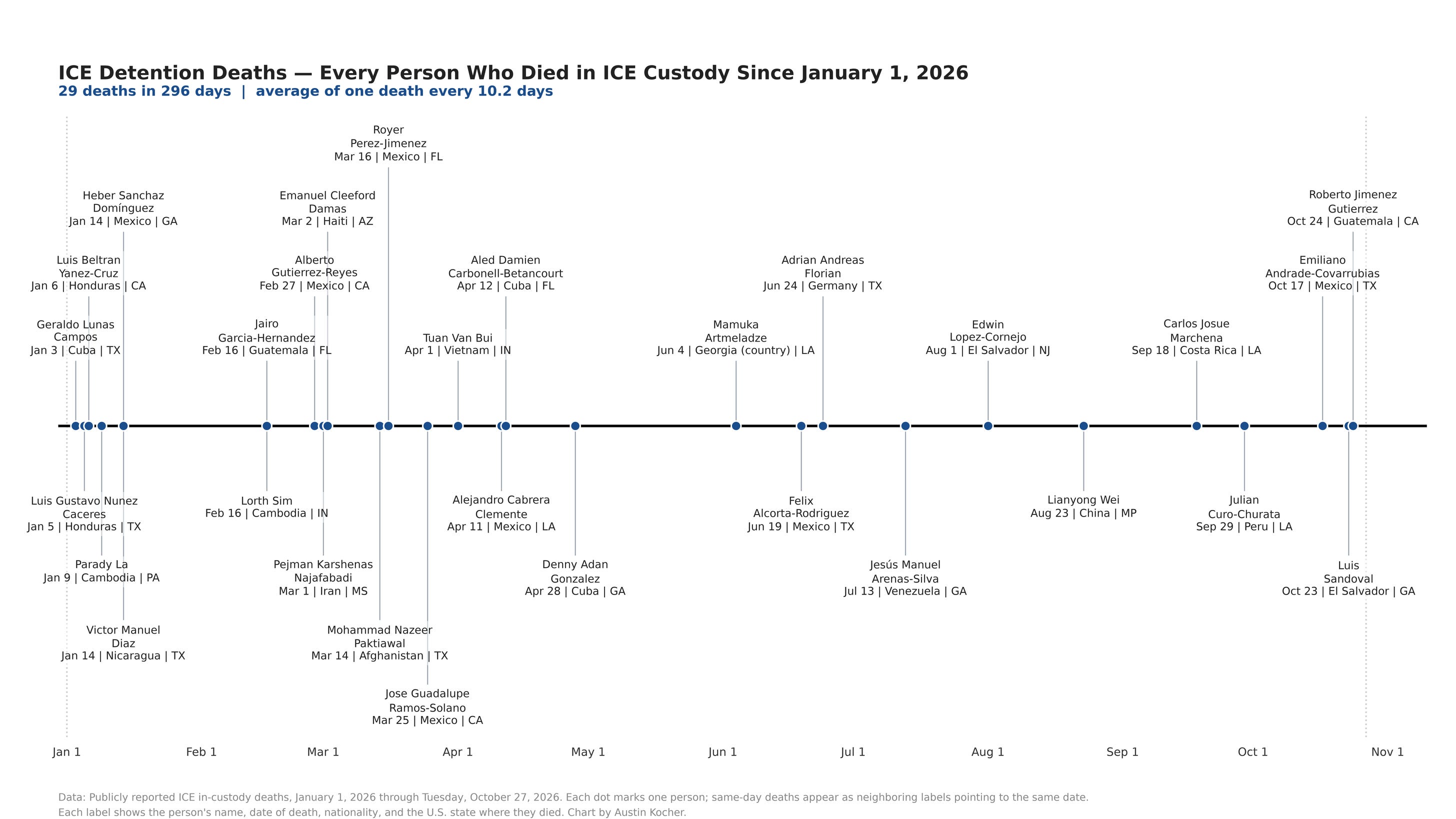
After our general discussion of the scales of political geography — from global conflict to subtle ways in which people are included or excluded in particular spaces — I decided, again, to use one of ICE’s Detainee Death Notifications as a real-life case study in examining political language. So after some context and a content warning, I shared ICE’s press release page. At the top, just like last week at Columbia, was yet another new announcement of another detained death: Roberto Jimenez Gutierrez, a 43-year-old Guatemalan man, died at Otay Mesa near San Diego, just one day after the death of Luis Sandoval in Folkston, Georgia.
Like my previous post, this caught me off guard. People are dying in detention faster than I can even keep up — and I study this for a living.
I won’t share the details of what the students said in response to reading the announcement, but students were able to see, and analyze, political language at work. This isn’t the type of material I normally try to work into an undergraduate class. And yet, we force so many dry, disinterested readings onto students, even in very serious courses, rather than draw from the library of calamitous lesson plans that the world writes for us seemingly every day.
FY 2026 was already the deadliest year on record for ICE, with 37 custodial deaths and many more on the streets across the country. Already in FY 2027, there have been three. Altogether under this administration, 60 people have died in ICE detention, while many others have died as a result of ICE and Border Patrol activity. I know some reports will call this the 61st; my count is squarely for people in detention, which is more conservative than a count that includes other tragedies outside of detention.
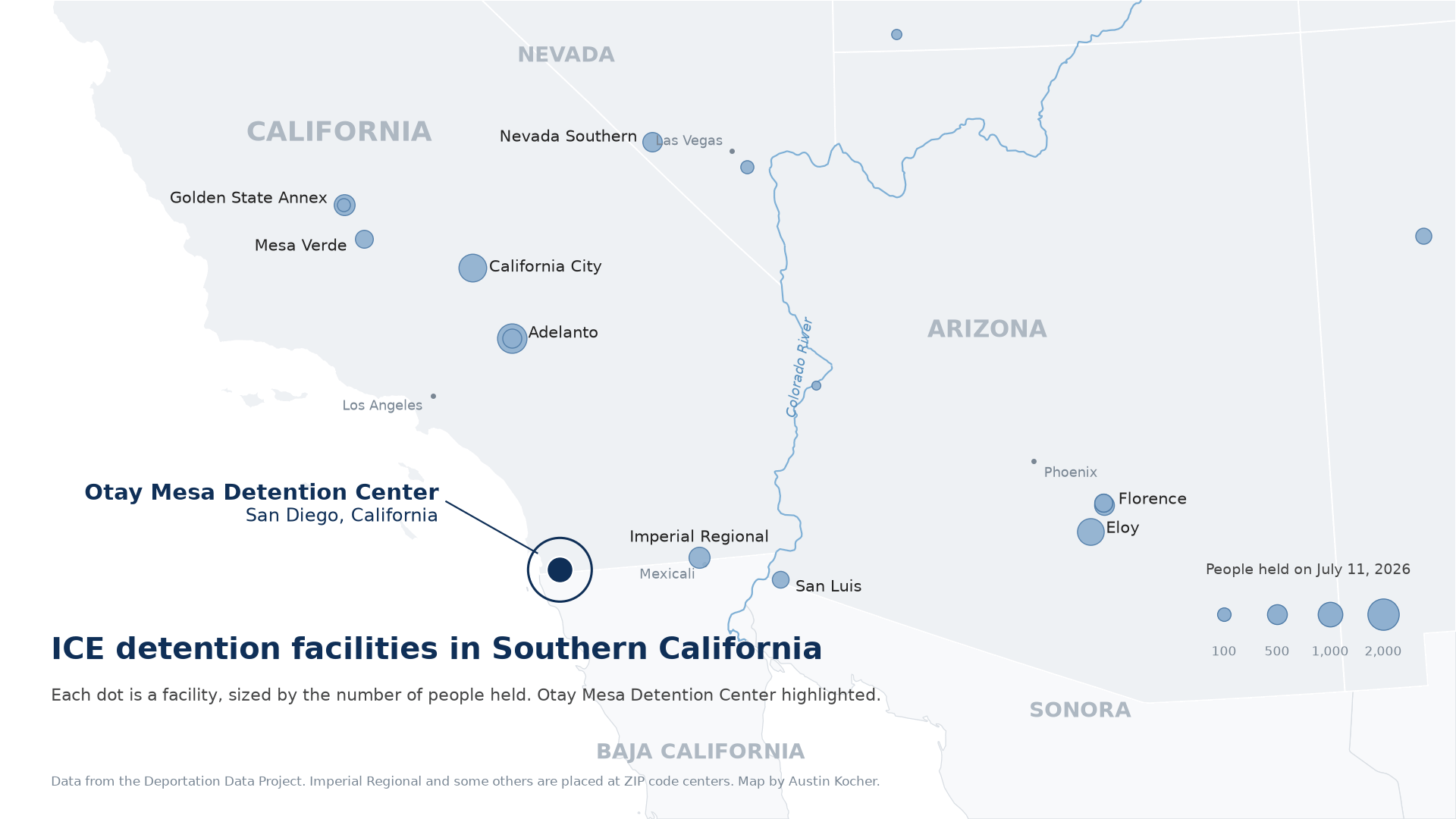
We don’t know the full story of Roberto Jimenez Gutierrez’s death, but we do know something about the Otay Mesa detention facility. Just recently, I spoke with Congressman Mike Levin, who regularly visits the center and has expressed concern over the lack of humanity within the immigrant detention system.
Otay Mesa is operated by CoreCivic and owned by the Department of Homeland Security, and it has operated for at least 20 years. According to the latest data from the Deportation Data Project, the Otay Mesa facility held 1,231 people. I count at least another 10 deaths there since 2005.
So powerful— I’m also an educator and you constantly give me fascinating ways of framing our current moment for my community college students. Keep doing your amazing work. You’re helping us all in significant ways. 🔥
Your post is most appreciated, Austin.
Greetings from Cajun Country 🐊 Louisiana USA 🇺🇸