
Introducing Relevant Football: Using the FIFA World Cup to Learn About the World
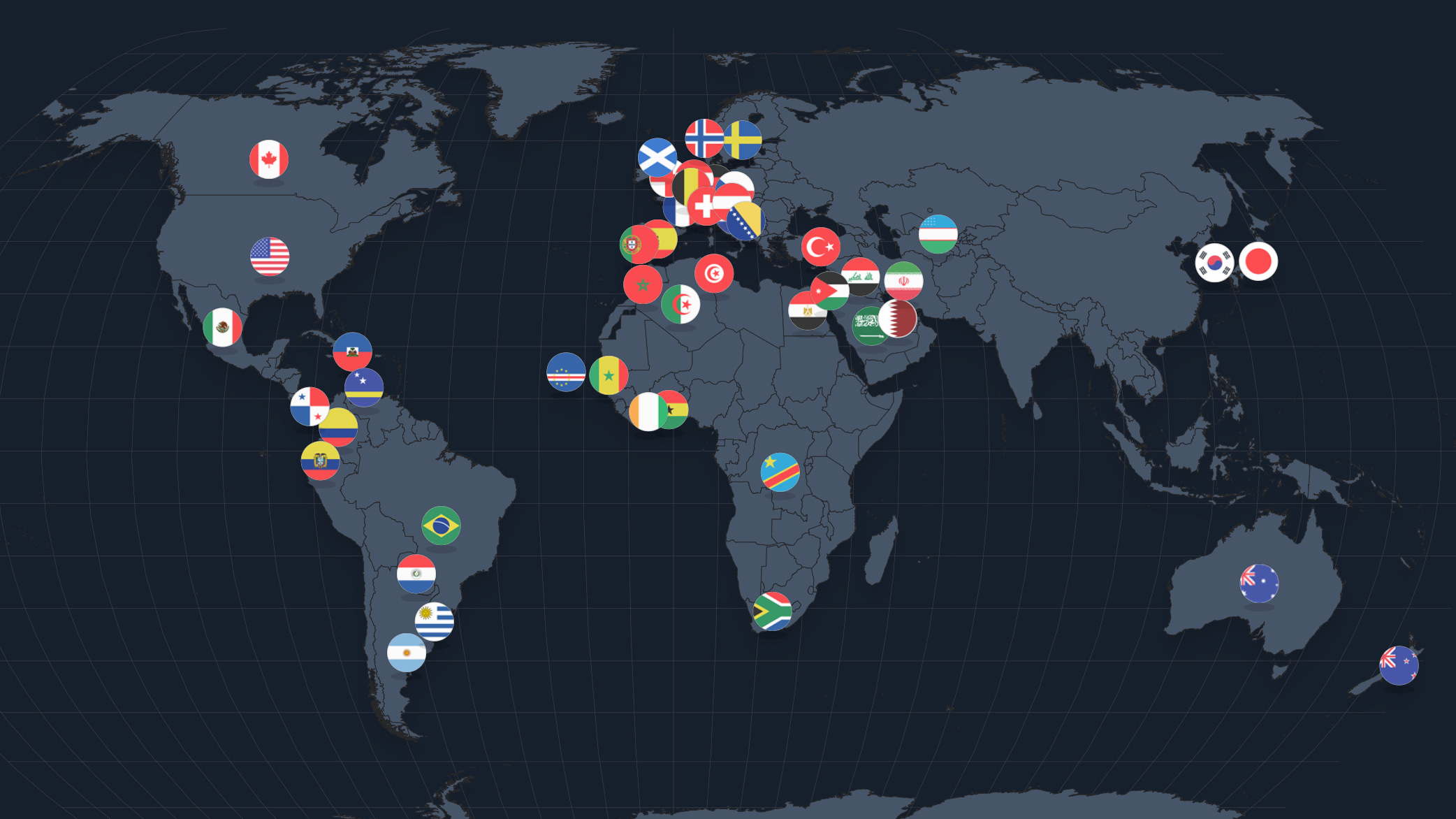
Launch day! ⚽ We built Relevant Football to turn 2026 FIFA World Cup fandom into a chance to learn about all 48 competing nations, from GDP and demographics to energy and environment.


The Men’s World Cup kicks off this Thursday as one of the most important global events of the year. Alongside this, we are announcing a dedicated project called Relevant Football, a standalone platform that incorporates key data points about the tournament as well as information about the countries involved designed to encourage greater global understanding and respect.
At a time when so much news is bad news, and so much of our national and geopolitical story is about antagonism and division, we believe that the World Cup offers an opportunity for positive stories rooted in peaceful but passionate competition that connect us to our shared global humanity. And we believe data can play a role in achieving this ambitious vision. The Relevant Football platform provides all of the information you need about the World Cup, including historical data about team performance, information about the stadiums and players, and updated information about the results of matches during the tournament. But the site also includes detailed information about the participating countries so you can learn more about topics such as geography, economics, land cover, and energy. We think Relevant Football is a unique tool that you’ll enjoy using and returning to over the next several weeks.
Before we share more about the platform, we want to start by explaining why we built this in the first place. Adam and I are two of the three cofounders of Relevant Research, where the team spends nearly all of their time on immigration data and related development projects. Among our core values is the belief in the advancement of public understanding through the creative application of data science, which is why we produce projects such as Detention Reports, the Detention Pregnancy Tracker, and the “Collateral Damage” report on mixed-status couples. Relevant Football is our first project that incorporates our values and capabilities into a project that is more hopeful and playful than our usual focus on the dire data associated with immigration enforcement. Among the two of us, Adam—the project’s visionary—is the devout sports fan and I enthusiastically tag along to basketball games and hockey games when given the opportunity, eager to learn more about the cultural and regulatory norms of sports like a visitor to a foreign country. In the process, I have learned much about the way that sports provides a unique opportunity for narrative that, for good reason, captures the attention of so many people across the globe—including many immigrants here in the United States. A recent Pew poll found that about a quarter (23%) of all U.S. born people say they will watch the World Cup, but for immigrants, that number is twice as high at 54%.
We admit that the World Cup is certainly fraught. In the minds of many football fans, FIFA’s association with corruption, greed, and backroom politics taints the simplicity and purity of sport and undermines the optimistic spirit of the event. Like the Olympic Games, the World Cup has a long history of cozying up to authoritarian leaders when there’s a profit to be made. The World Cup was controversially hosted by Italy during Mussolini’s reign in 1934, Argentina during the fascist Videla junta in 1978, and, more recently, by Russia in 2018 and Qatar in 2022—both criticized for corruption and human rights violations. For those who know this history, hosting the World Cup in the United States under the Trump administration fits in neatly as just the most recent iteration of FIFA’s preferential option for the despotic. Trump’s promise of a heavy immigration enforcement presence at and near the stadiums introduces needless threats and intimidation and has soured enthusiasm. But even in this, the diversity and commitment of the community is evident in grassroots efforts to provide know-your-rights trainings, legal observers, and on-site support to people in and around the stadiums.
The organizations behind the World Cup may be imperfect and the United States may be an imperfect host—but precisely for these reasons, maybe this is the timeliest edition of the tournament in its history. The World Cup only happens once every four years; so in this way, it is something special, something that fans the world over look forward to. For some fans (like Austin), it might be the only time they watch football with any regularity, making it a great ambassador for the sport.
But it does something more. At a time of deep geopolitical antagonisms, the World Cup is one of the few opportunities we have to remember that people are not their governments, and the cruelty that governments do in the name of their people stands in sharp contrast to the goodness of their people. The demographics of the athletes themselves testify to the international integration of the sport. Nearly one in four of all rostered players in the 2026 World Cup were born in a different country than they represent. Despite attempts to politicize sports (see my colleague Natalie Koch’s work on the geopolitics of sports), the athletes on the field represent their country, but they do not necessarily represent their government. Instead, the World Cup is a celebration of the athleticism of the athletes, the camaraderie of fans who show up to support the teams, an opportunity to witness (hopefully) peaceful competition between players—and for this project, an opportunity to work with numbers that aren’t all negative. It is a chance to learn more about countries participating in the tournament.
On a recent video call, Adam presented the Relevant Football project to a group of colleagues in the immigration policy and advocacy world as an example of how we are using our team’s capabilities to tell uplifting stories using data, bring people together, and raise global awareness. One of the participants said that they appreciated the addition of “joy” to the conversation—and that’s exactly what we are trying to do. Data is often mischaracterized as “abstract,” in contrast to lived experience. But for Adam, me, and the rest of the team, nothing could be further from the truth. We are in this work because of our years of ongoing, relational, on-the-ground experience that helped us to understand how to make sense of data and leverage data in a way that has a real-world impact. As many of you know, that work can be draining and, given the moment we are living through, it can become difficult to remember the beautiful, positive side of immigration that helps us work together toward a better future on our shared planet. As Jerry Brewer wrote for The Athletic earlier today in an article titled Who, exactly, is this World Cup for?, “The World Cup’s enduring value isn’t just that it brings elite football to a country. It briefly opens the world.”
So how does Relevant Football attempt to bring people around the tournament and “open the world?”
The Relevant Football platform is built around 48 country profiles, one for each nation competing in the 2026 tournament. Each profile brings together data from leading international organizations, including the United Nations, the World Bank, the IMF, and FIFA, to offer a picture of each country that goes well beyond the football pitch. Visitors can explore population and demographic data, geographic characteristics, energy transitions, forest cover and environmental indicators, and economic data including GDP per capita and purchasing power parity. The goal is to give fans a reason to learn something real about the countries they are cheering for, or cheering against. The site looks as good—maybe better—on mobile, so you always have it with you.
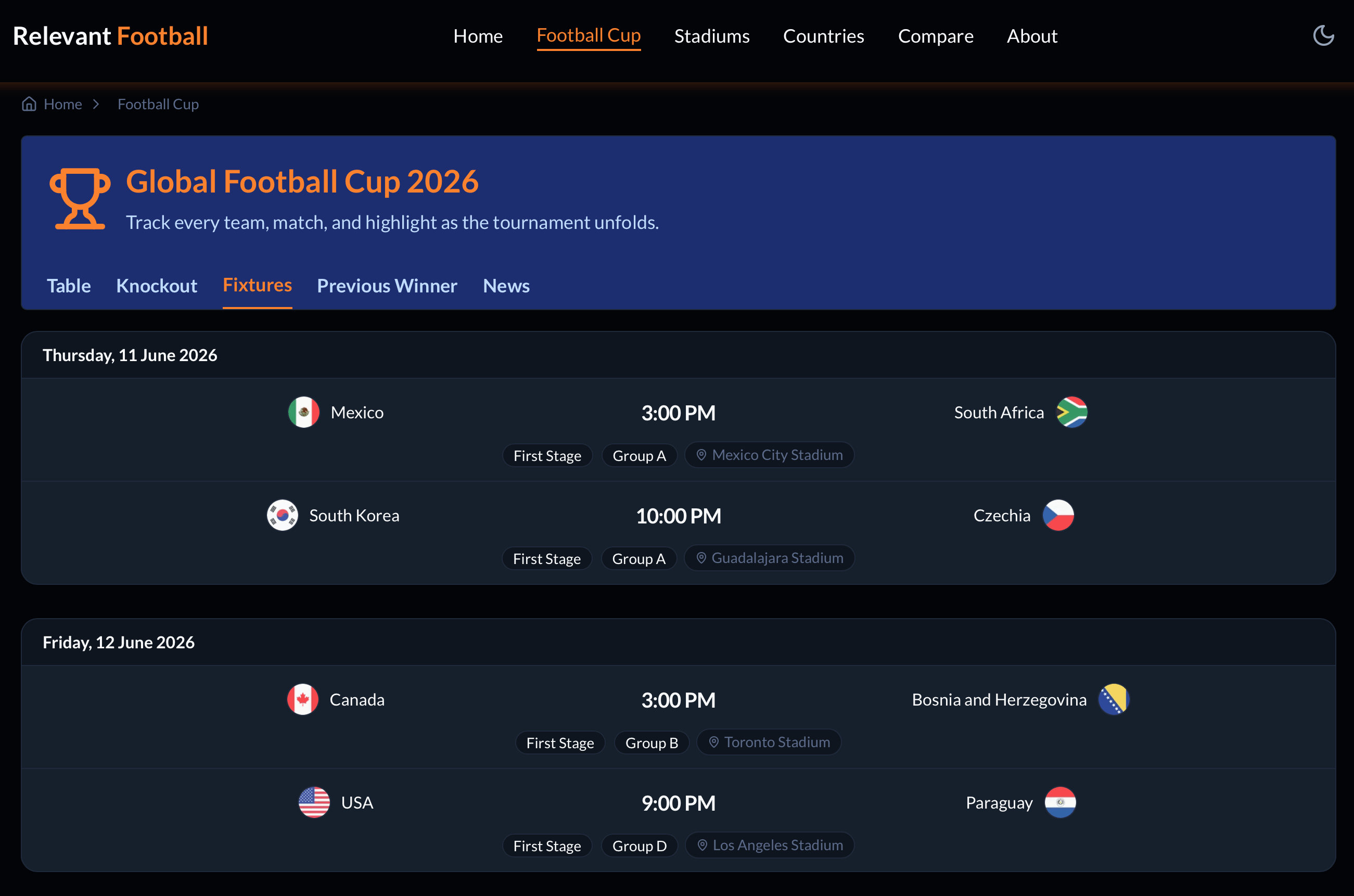
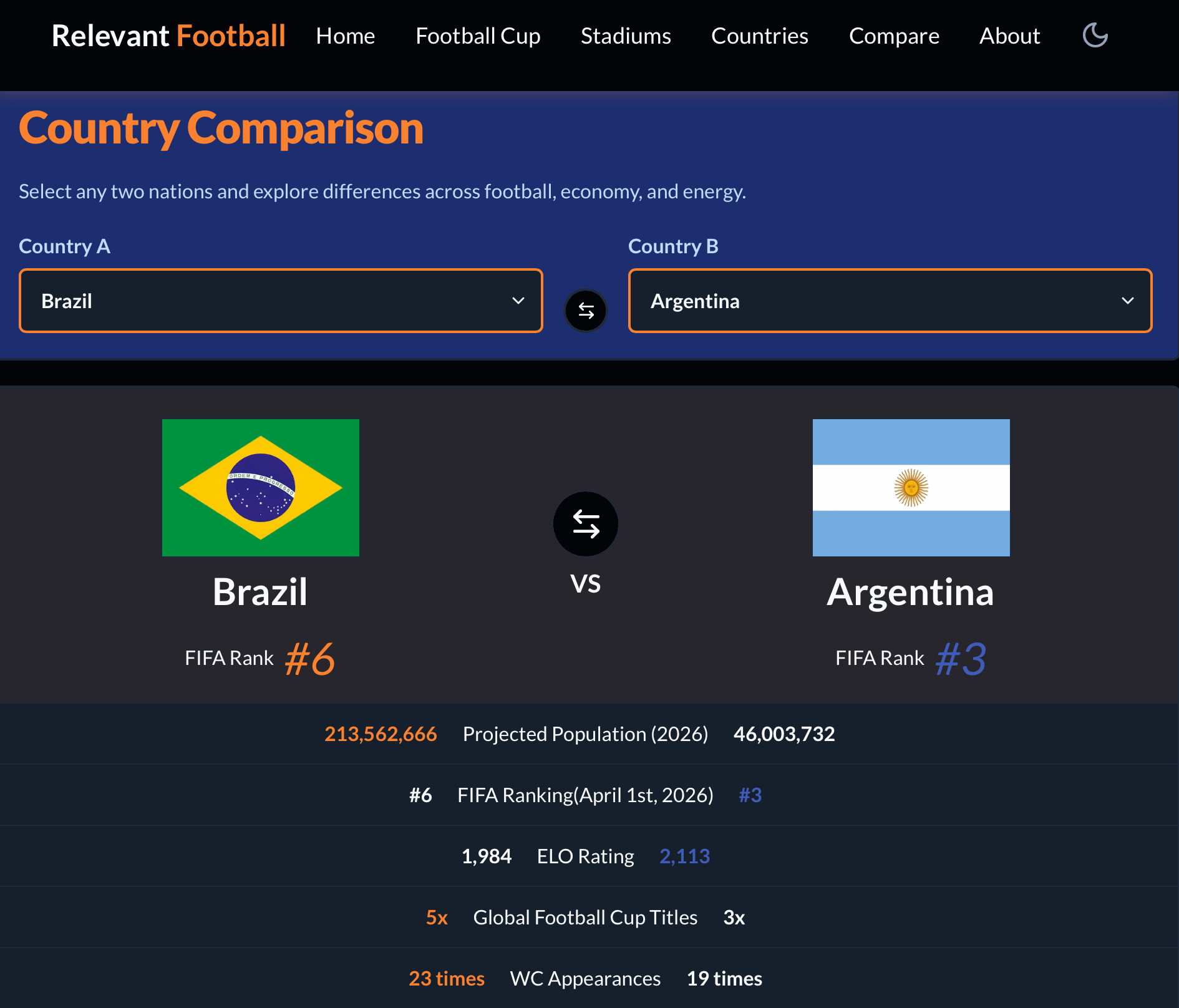
The platform also includes dedicated pages for tournament standings, fixtures, and the knockout bracket, as well as profiles for every 2026 venue with location, capacity, and host country. One of the site’s more distinctive features is a comparison tool that lets users place any two of the 48 competing nations side by side across economic, environmental, and football statistics, even if those two countries never meet on the field. For football-specific data, the site includes FIFA rankings, ELO ratings, squad-level statistics, and each country’s full World Cup history.
The site will be actively maintained and updated throughout the tournament. To submit feedback or flag a correction, you can reach Adam Sawyer at adam@relevant-research.com. Adam originally soft-launched the site last week to get feedback, another great reason to follow him on Bluesky below.
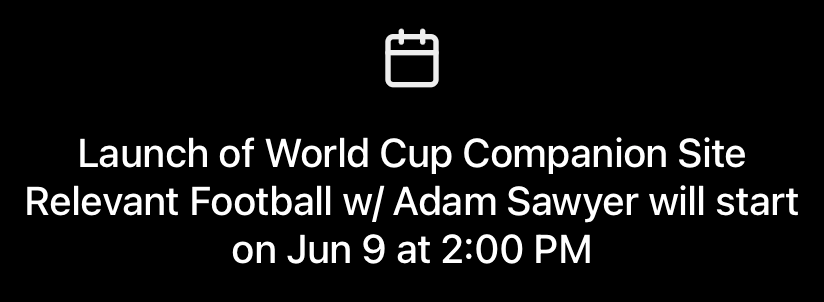
We invite you to join us tomorrow (Tuesday, June 9) at 2:00 PM on Substack Live for a conversation about the World Cup, the Relevant Football project, and the importance of injecting joy and cultural understanding into our work.
 | A guest post by
|
Hi, Austin. Are you familiar with any of the related efforts around the World Cup to use this moment to address ICE/immigration? I'm tangentially involved in these, but can point you to the individuals more directly involved, if you're interested.
"The Welcome Standard" aims to get businesses to learn about and commit to addressing ICE's presence in host cities: https://www.welcomestandard.org/
"No ICE in the Cup" asks individuals to get involved, help others, know their rights, etc.: https://www.noiceinthecup.us/learn-more/?utm_source=roganslist
There's seemingly so much overlap with what you're doing that I wanted to point these your way. Let me know if you'd like an intro to the people leading the charge(s)!
Warm regards,
Janna Sakson
jannasaks@gmail.com