

Mexico City is on lots of people’s radars these days, and for good reason: it’s a hip, world-class city with a warm, bohemian exuberance, all the art, culture, and cuisine you can handle, and it’s an easy flight from most major U.S. cities. I didn’t know much about CDMX (as it is now called) before I spent two weeks there at the beginning of September, choosing, as I typically do, to take a more “situationist” approach to urban travel, and I can say, with no great surprise or originality, that the city is worth every minute you can give it.
My trip was a mix of a birthday gift to myself, a much-needed out-of-the-U.S. vacation, and an experiment in short-term digital nomadism. I hiked a mountain, wandered around the city, looked at art, went to a lucha libre wrestling match, ate mole, chiles en nogada, and tacos, and wondered not infrequently why, exactly, anyone would live in the States when Mexico City is right there. As a geographer and urbanophile, I find that Mexico City gets so much right that U.S. cities get wrong: neighborhood density, vibrant sidewalk culture, the same bike share system that D.C. uses, protected bike and bus lanes, and plenty of independent bookstores. To be somewhat essentializing, it has the best parts of what most people like about European cities, but maintains the sociability and entrepreneurialism of Latin America. I loved it.


Chilangos, Mexico City residents, cringe when they hear U.S. Americans talk about moving there. The city has been overrun with foreigners lured by its charm, driving up the cost of housing and displacing Spanish-speaking residents, similar to how East Berlin has transformed over the past 15 years from a grungy counter-cultural scene to some of the most sought-after properties in the city. At the same time, one Mexican colleague told me these concerns contain a contradiction: the presence of foreigners and their money is the price a city pays for economic growth and global desirability. In any case, I won’t be gentrifying there anytime soon, but you can bet I’ll be going back.
Foreign condo owners and digital nomads aren’t the only controversial newcomers to Mexico City. Over the past 18 months, the closure of the U.S.-Mexico border and the surge in deportations, including deportations of non-Mexicans to Mexico, have meant that Mexico City is changing from a city that people left or passed through to a city where people come and stay. Organizations whose prior mission focused on providing support to migrants heading north have had to shift to post-deportation resettlement, family reunification with relatives still in the States, and legal services for migrants navigating the Mexican immigration system as much as the U.S. immigration system. With our collective focus on the chaotic immigration enforcement activity within the U.S., it’s easy to forget that there are global consequences to the current deportation regime—and perhaps no one feels it more acutely than our neighbor to the south.
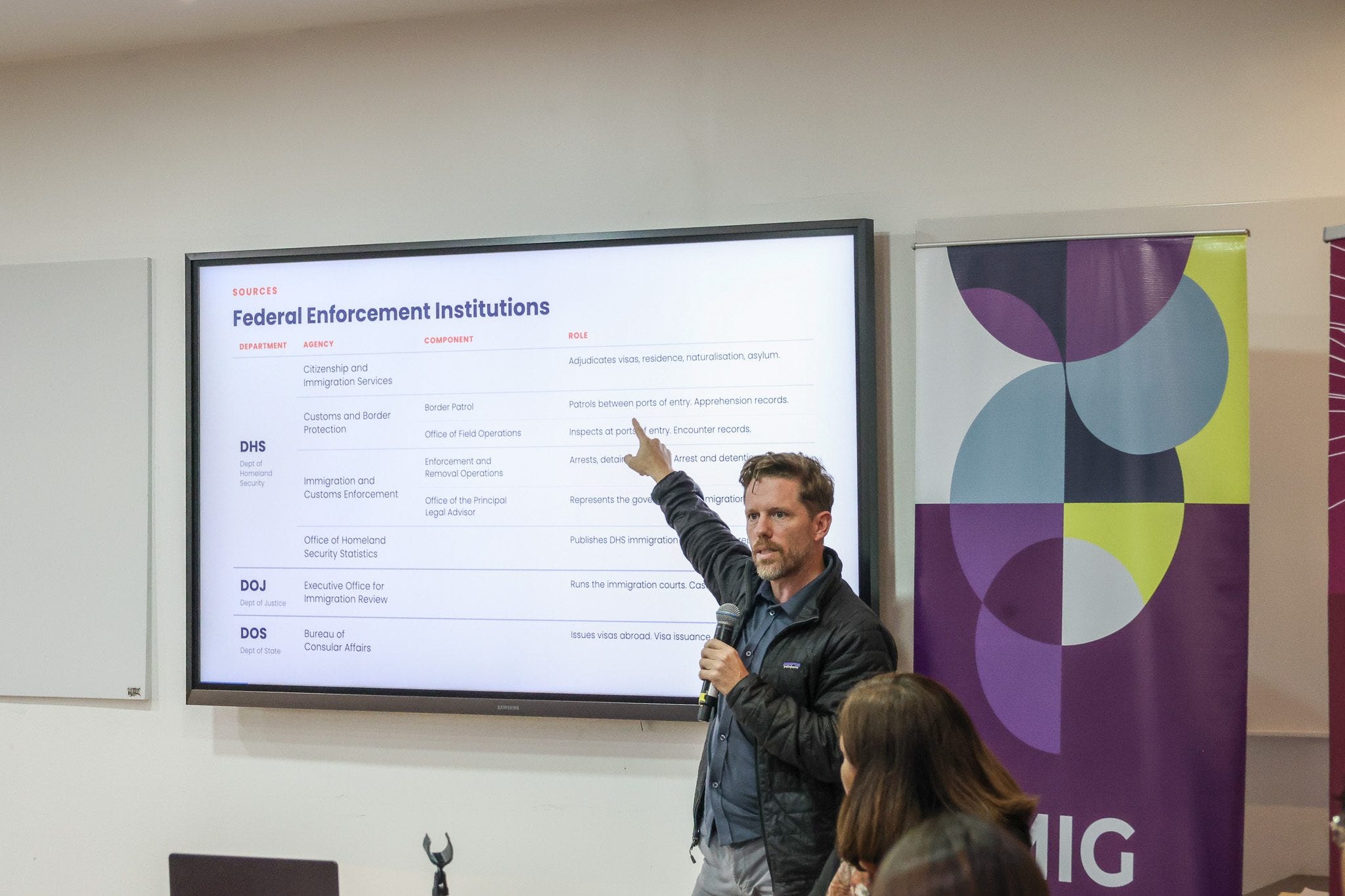
I said I went to Mexico City in part for a vacation, but I hope you’ll sympathize with me if what I consider a vacation includes getting to talk with interesting people about their immigration work and share some of my research on data. I gave talks at El Colegio de México and Universidad Nacional Autónoma de México (UNAM), and met with Conexión Migrante (an information hub for migrants) and El Instituto para las Mujeres en la Migración (IMUMI). This was a highlight of my trip, and I left convinced that I need to do a better job of connecting the data I work with every day with the full range of audiences outside of the country—especially in Mexico, which has such a unique and longstanding migration relationship with the United States.
In the rest of this post, I want to share some field notes from my conversations and introduce you to people and organizations you may not have heard of before. If you know other organizations or people in CDMX that I missed, please connect me.


El Colegio de México (COLMEX)
Thanks to my incredible host and colleague, Dr. Claudia Masferrer, I had the great fortune to spend an evening discussing how to make sense of U.S. immigration enforcement data, and especially how we can leverage this data to understand what Mexico is experiencing right now. COLMEX is primarily a graduate research institution and I could feel it in the studiousness of its quiet campus away from central Mexico City.
Despite leaving with plenty of time for the commute, I arrived early but went to the wrong building, a building that was not even on COLMEX’s campus, and sat in the lobby for twenty minutes waiting for a person who did not work there. This alleged geographer finally found his way to a confused Claudia using WhatsApp’s location share feature, and apologized for making everyone late for lunch, which we took at the main dive for campus professors: a semi-permanent street vendor with tarps over the outdoor seating area to block the predictable afternoon rains.
Over lunch, it was clear that Claudia is a leading scholar in the field of migration studies and exactly the kind of person I wanted to talk to about what’s going on in Mexico. She is an Associate Professor at the Center for Demographic, Urban, and Environmental Studies and she runs the Seminario Migración, desigualdad y políticas públicas (MIGDEP), the speaker series that hosted my talk. Claudia’s latest book is called The Returned: Former U.S. Migrants’ Lives in Mexico City, through which she and her coauthors find that “upon their return, migrants in Mexico City felt disoriented and lost and had difficulty adapting to a massive urban environment where there is little support for returnees.”
Claudia’s work reminds me that we often talk about the impacts of deportation on U.S. communities, but we talk much less about the impact on receiving communities. We forget that deportation harms communities on both ends of forced displacement, fixing nothing but multiplying the injury and typically leading only to more, not less, migration. I remember my colleague Nancy Hiemstra making a similar point years ago. While we think of unlawful migration as leading to deportation, it actually goes both ways: deportation is, itself, a leading cause of unlawful migration, not a deterrent to it. We need to understand both sides of that story by listening to scholars in the U.S. and listening to scholars in receiving countries, too.
Claudia’s colleague, Víctor Manuel García-Guerrero, joined us. Víctor is in charge of population projections in Mexico, and like demographers in the United States, he is struggling with how to address the fact that mass deportation is messing with the numbers. In the U.S., the main question is about how many people are leaving; in Mexico, it’s even more complicated. Most countries are either sending countries, transit countries, or receiving countries. Right now, Mexico is all three. Adding to this, the Mexican government is processing more asylum claims than ever, deporting more people than ever, and flying people from northern Mexico to southern Mexico as part of a containment plan to prevent people from reaching the border. Data on U.S. deportations can help with population projections, but to truly solve these bigger statistical questions, we need a revolution in immigration data sharing that will require more transparency from all of our governments.
Claudia also introduced me to Nancy Landa, a deportee—her word, though it made me pause at first—who works for Al Otro Lado in Mexico City. The fact that Al Otro Lado, a bi-national organization that normally focuses on the border region, has a representative in Mexico City is evidence of the shift I noted above: advocacy is moving toward place-based work in reception zones that used to be transit zones. Nancy and I had a wide-ranging conversation, but one thing stuck out to me that I want to pass on.
When I was coming up around the immigrant rights movement in the U.S., the emphasis at the time was on undocumented-led organizing. It’s a principle that has evolved as the political situation has intensified, but it will always be a principle I take seriously. Nancy, who went through the deportation process herself years ago, describes a real lack of deportee-led organizing efforts in Mexico, which means that people who have lived experience are rarely in positions of influence, even within the world of immigrant support and advocacy. I can imagine a variety of reasons for this, of course—stigma, social capital, classism, and colorism, just to name a few—but, for me, it illustrated the ways in which the systemic barriers to change often transcend any single country, and we would do well to remember that when we think about what authentic international solidarity looks like.
Nancy went on to illustrate the complexity of life post-deportation. After spending most of her life in the United States and being returned to Mexico, Nancy pursued a graduate degree in England, where she was no longer a deportee but an international student. As Nancy put it, most people don’t expect her to be all of these things at once, including a deportee with a graduate education. A danger of immigration rhetoric is that we tend to normalize blunt categories, when reality is far messier and much more interesting. Even in trying to be generous, this description fails to capture Nancy’s expertise, impact, and prolific creativity—so check out her work at nancylanda.com.
In addition to Víctor and Nancy, I had coffee with about a dozen students and professors, where I learned even more about research projects underway looking at the intersection of the U.S. and Mexican immigration systems. The conversation continued seamlessly into the event, which was split between a workshop-style presentation and practical discussion on what immigration enforcement data we have available, how to get it, and how (and why) to incorporate it into student research projects. I even included findings specifically on deportations to Mexico, including third-country deportations, which are on the rise. I am grateful to COLMEX and Claudia for being terrific hosts and hope I can visit again when I return.


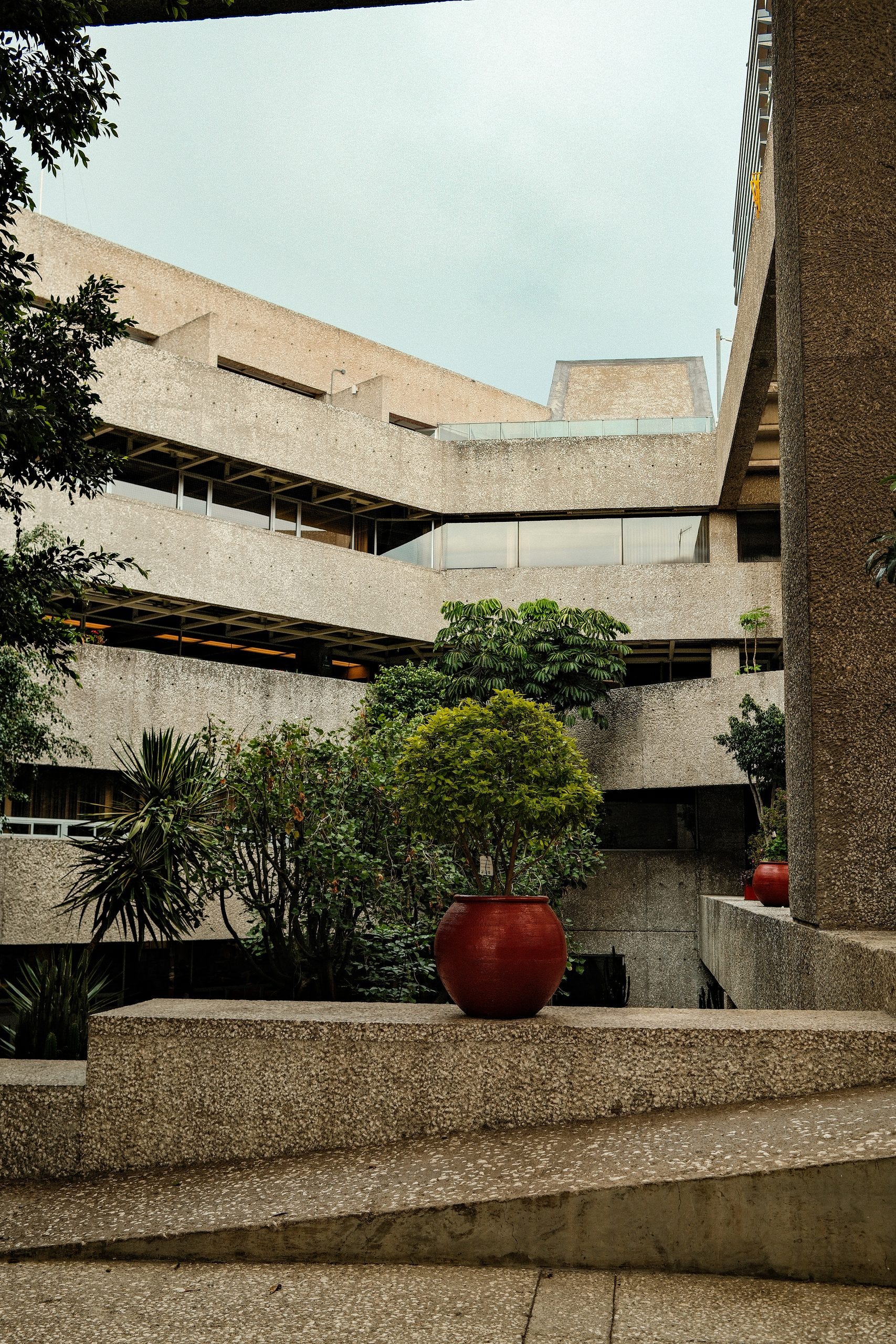
I can’t close this section without bringing your attention to the magnificent architecture of COLMEX, a masterpiece of mid-century brutalism, that artistic movement that too often gets a bad rap for its run of concrete monstrosities. Brutalism emerged in the post-war period as an economical and practical approach to rebuilding, and many of its architects saw it as a break from the monumental, nostalgic styles favored by fascist regimes. Brutalists sought to balance elegance and function, and I believe you can see this in the architecture of COLMEX and, for that matter, in Boston City Hall, which I had the opportunity to visit recently. (The first search result for Boston City Hall was a poll that named it the fourth ugliest building in the world and the second ugliest in the United States. No, it’s not. I will die on this hill. Don’t at me.)


The blocky design of these buildings gives the impression that they were snapped together with LEGO, and yet, unlike many newer buildings today, they at least had the intention of serving the interest of what we used to call “public space.” I’m not defending all brutalist architecture or arguing for its resurgence, but at least these buildings have an original thought behind them. Try finding an original thought amid the lazily derivative glass-and-steel nothing WeWork-looking office buildings and cookie-cutter overpriced condos springing up overnight in Columbus, D.C., and so-called development districts across the country.


Universidad Nacional Autónoma de México (UNAM)
The day after my talk at COLMEX, I took an Uber to UNAM to speak with students and faculty on the same topic as before, showed up early again, and got lost... again. I felt somewhat more justified this time. UNAM is enormous. Thankfully, my host, Dr. Camelia Tigau, a professor at the Center for Research on North America, found me wandering the pavement outside of her building and led me to the right seminar room, where a table of students and faculty was patiently working their way through the snacks and coffee while I clumsily plugged in my computer and tried to get my slides to show on the TV screen.
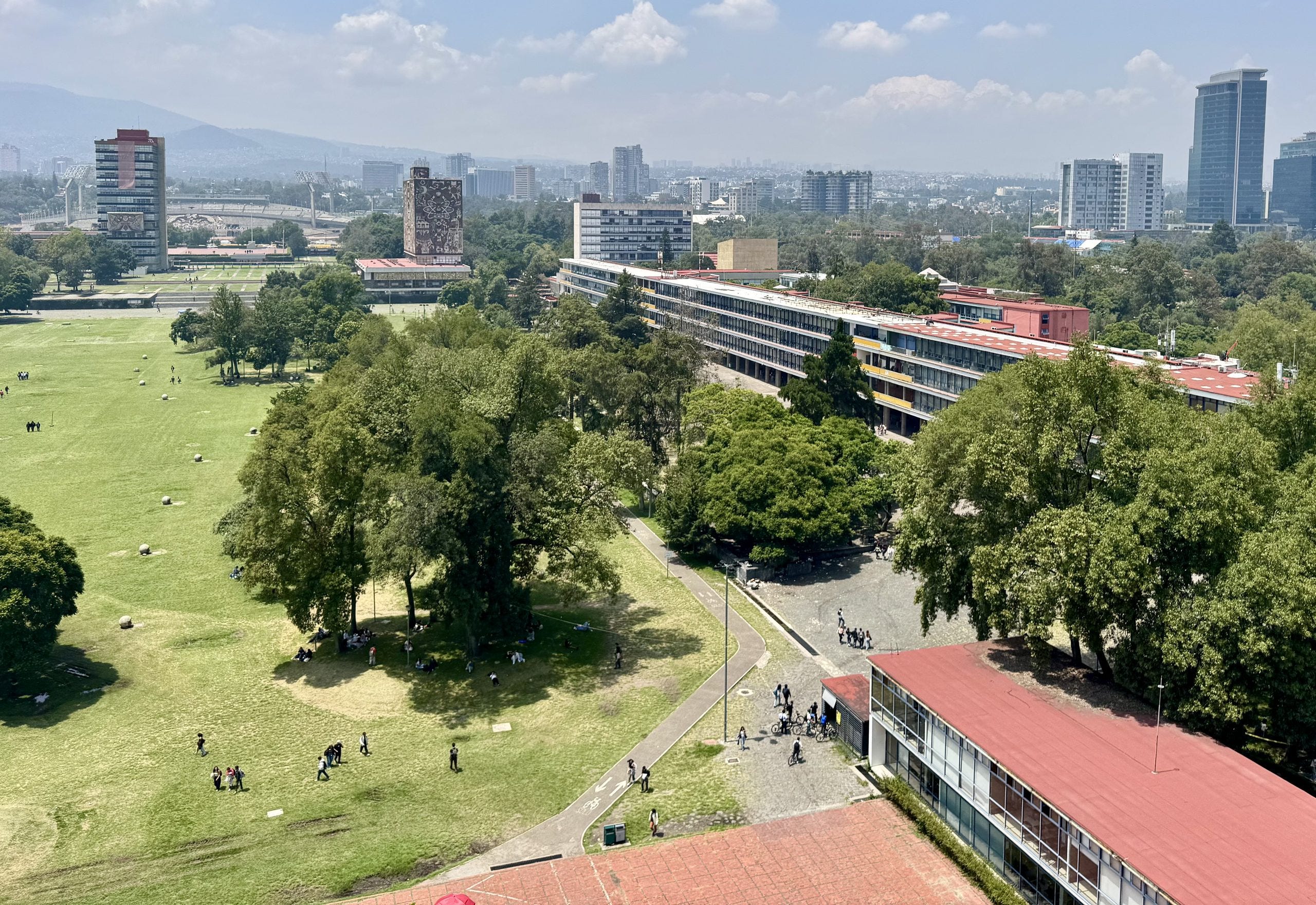
I had not been as familiar with COLMEX before my visit, but UNAM was a different story—it is legendary in its history, politics, and sheer size. UNAM traces its origins to the Royal and Pontifical University of Mexico, founded in 1551, making it almost twice as old as the United States, though the modern university was re-established in 1910. A celebratory banner hanging from the building where my seminar was held proclaimed its 475th anniversary.
To an outsider like me, the contrast between COLMEX and UNAM could not have been sharper. COLMEX is much smaller, barely 1,000 students, faculty, and staff if you count everyone on payroll, while UNAM is literally its own city. Later, walking across the grassy central area of UNAM’s campus, one of the graduate students put numbers to UNAM’s enormous student population and global reach. The main campus of UNAM enrolls 175,000 students, more than twice as large as Arizona State University’s 80,000 students on the Tempe campus. When UNAM’s campuses across Mexico are tallied up, the total student population exceeds 350,000—about the size of New Orleans—making it one of the largest universities in the world, with outposts as far away as Beijing, Paris, and London.
After my talk, Camelia and two students gave me a walking tour of the central part of campus to show off just a few of the institution’s many murals and to explain the symbolism behind the iconic mosaic by Juan O’Gorman that wraps around the main library building. From afar, the south wall of the library looks like a giant masked face, but a closer look reveals the contrasting cosmic worlds of pre-Hispanic civilizations and Spanish conquistadors, and the gritty violence of colonization that some say still isn’t over.
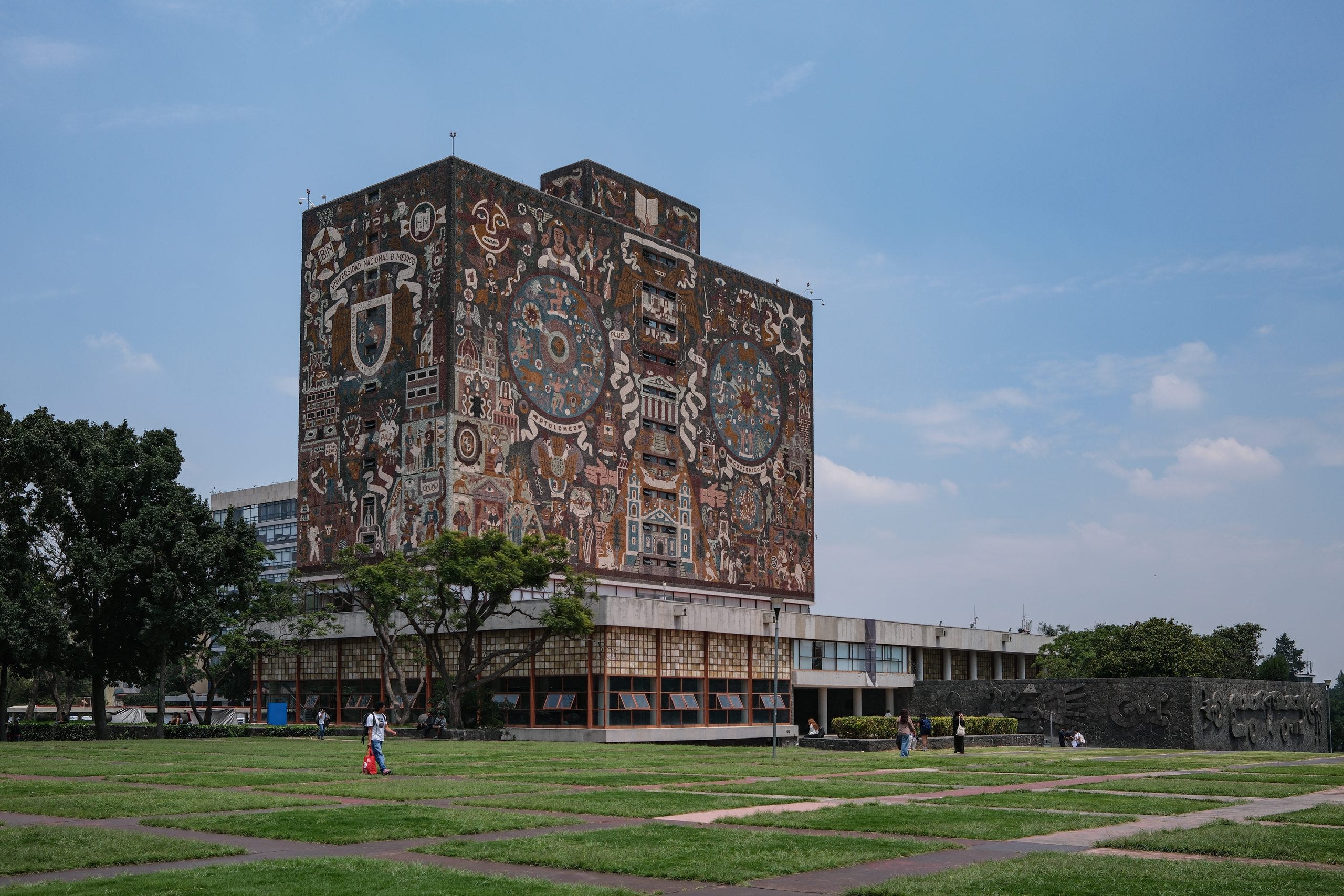
The mural reminded me of something I learned only recently. Just before Trump was sworn into office, I spent a week in Cancún with Anton Flores as a kind of pre-Trump break out of the country. We visited the archeological site of Chichén Itzá, where I learned (among very many things) just how distinctive and thriving the Maya people are today. It’s a bit shameful that I didn’t understand this better before, and my ignorance was another reminder that, to paraphrase Elizabeth Povinelli, the way we talk about “ancient civilizations” or Indigenous peoples often objectifies their historicity at the expense of contemporary recognition. (This is why, to me, the paradigmatic contradictions of immigration control are laid bare in the case of Indigenous asylum seekers from Latin America in U.S. immigration court.) O’Gorman’s emphasis on the spatial over the temporal invites us to see colonization as a constitutive relationship rather than a story with a beginning and an end.
An open-air market was bustling near the main bus stop, where students could buy translations of Marx and Lukács, pens and pencils, notebooks, Bluetooth speakers, tacos, Che posters, and handcrafted necklaces, most on a cash-only basis—all in the shadow of pre-Hispanic stories of fertility, sacrifice, and the mythic origins of the city. As we walked through the market to catch a ride back to Condesa, one of the professors noted how the market had grown, then, nodding toward an encampment in front of a wing of a building, mentioned that the auditorium had been occupied for years now, and no one seems to know precisely why or by whom anymore.
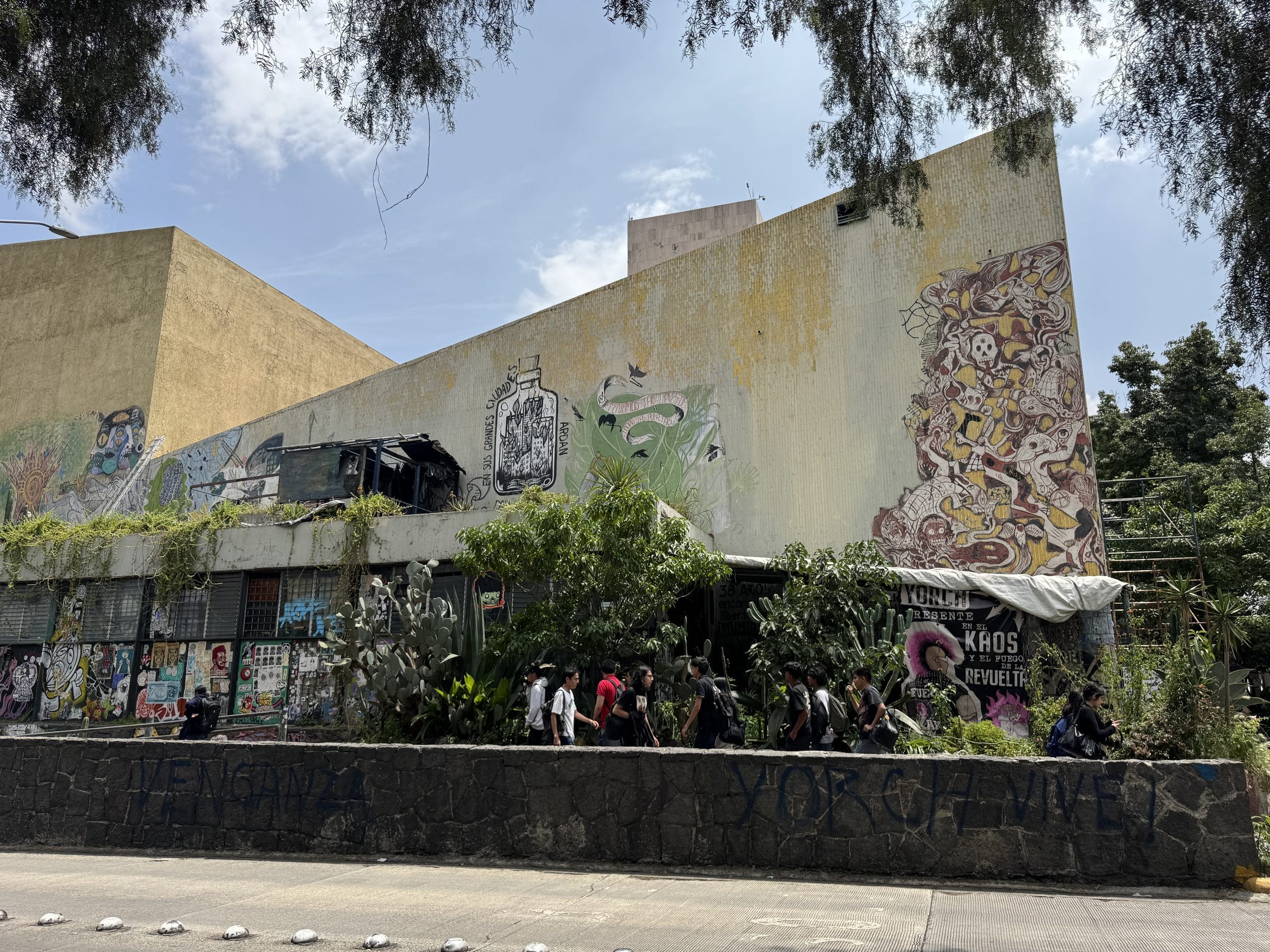
Only afterwards did I learn that the auditorium’s occupation began with a nine-month student strike in 1999 against the university’s attempts to raise tuition, and, like the Japanese holdouts after World War II, the squatters remained ensconced on their metaphorical island, never believing the battle was over. A New York Times article from nearly a decade ago flagged the occupation as the longest-running campus protest of its kind, noting that the famous occupation of Columbia University in 1968 ended after only a week. Even now, 27 years on, neither the administration nor the occupiers seem interested in change. The result is a kind of radical-yet-normalized semi-autonomous micro-zone created by an unofficial, perpetual cease-fire between feuding leftists and overburdened bureaucrats—a little slice of Christiania but with better food and cheaper weed.
Conexión Migrante
I was fortunate to visit the amazing team at Conexión Migrante, a migrant information hub that works as both a news outlet and a service organization at the same time, similar to Documented in New York City. Conexión’s Centro de Atención al Migrante is run by Selene Tapia and answers between 800 and 1,000 messages a month, with a person—typically an attorney, I believe—responding to each one.
Based on those calls for assistance and tips about what’s unfolding on the ground reporters, including Abel Domínguez and Valeria Acevedo, do the additional research needed to turn the most common questions into full-blown news articles that they push back out to everyone online and through their massive WhatsApp network. It’s super impressive.
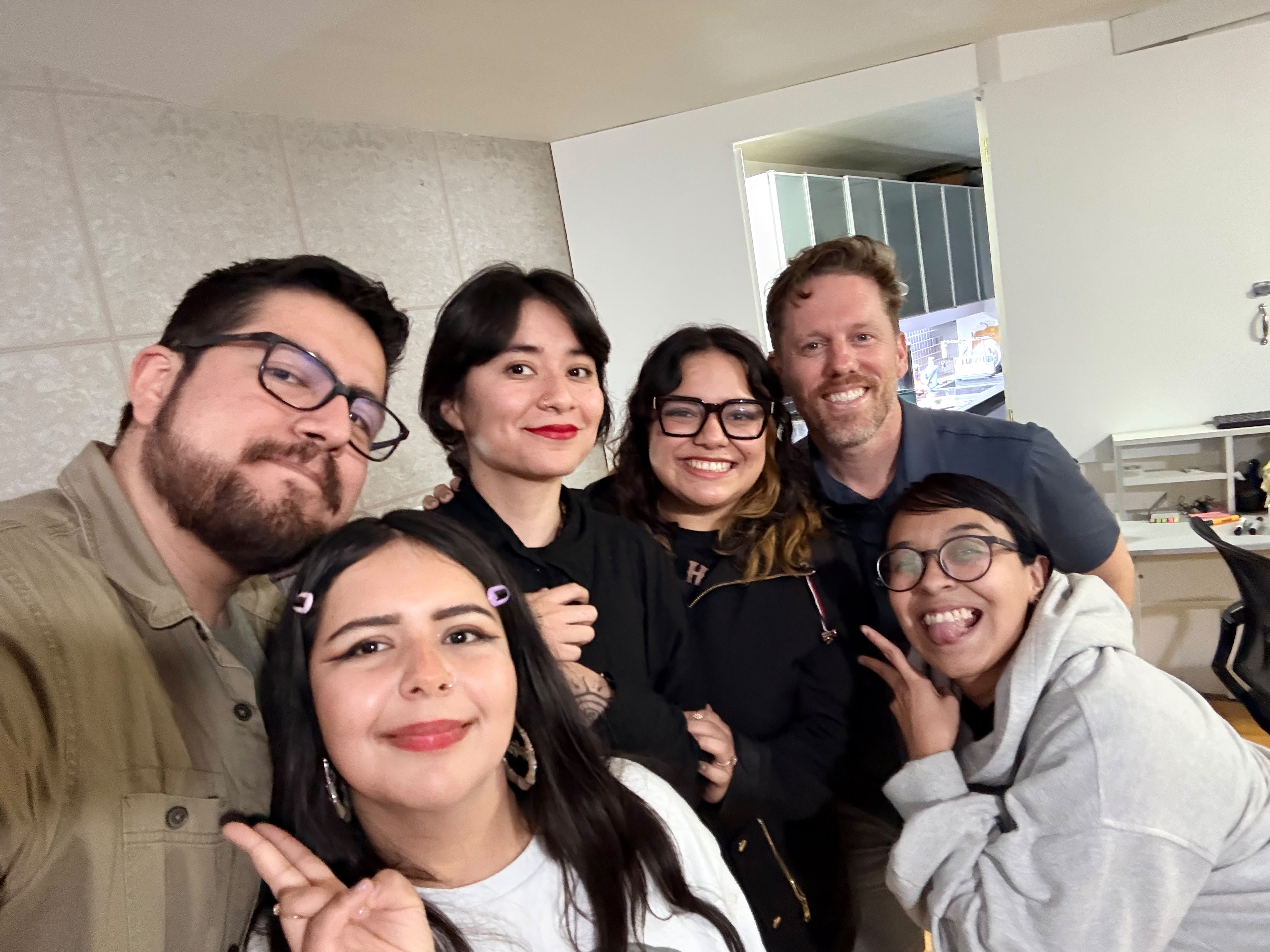
Its office, in a creative workspace that Selene described as often enriched with music and partner organizations passing through, was just a few blocks from where I stayed in Condesa. I spent a late afternoon with the team asking them about the trends that they are seeing and sharing resources for how to incorporate data into their reporting. During the conversation, I had the most moving experience of the entire trip. I learned that some of my own research actually gets passed along directly to immigrants in need of clarification and assistance. I started doing this work years ago with the hope that it would matter to someone, but I never imagined that the connection would someday be made that clearly. Thank you, Conexión.
If you’re looking for ways to keep up with immigration news outside of the mainstream, follow Conexión at @conectmigrante on X, @conexionmigranteoficial on Instagram, @conexionmigrantetv on YouTube, and through its news homepage at https://conexionmigrante.com. And kudos to founder Patricia Mercado Sánchez, who started the outlet in 2016 and won the International Center for Journalists’ (ICFJ) 2026 News Innovation Award.
El Instituto para las Mujeres en la Migración (IMUMI)
Last but not least, I met with Gretchen Kuhner and her team at El Instituto para las Mujeres en la Migración (IMUMI), an NGO that defends the rights of migrant women and their families through legal representation, policy work, and advocacy in Mexico and beyond. It will not surprise you to learn that migrants, and especially women migrants, don’t have it easy anywhere, including Mexico. Because of the trends I noted above, organizations like IMUMI are forced to do more than they have before to educate their local and federal elected leaders and advocate for recognition and due process for people going through the system.
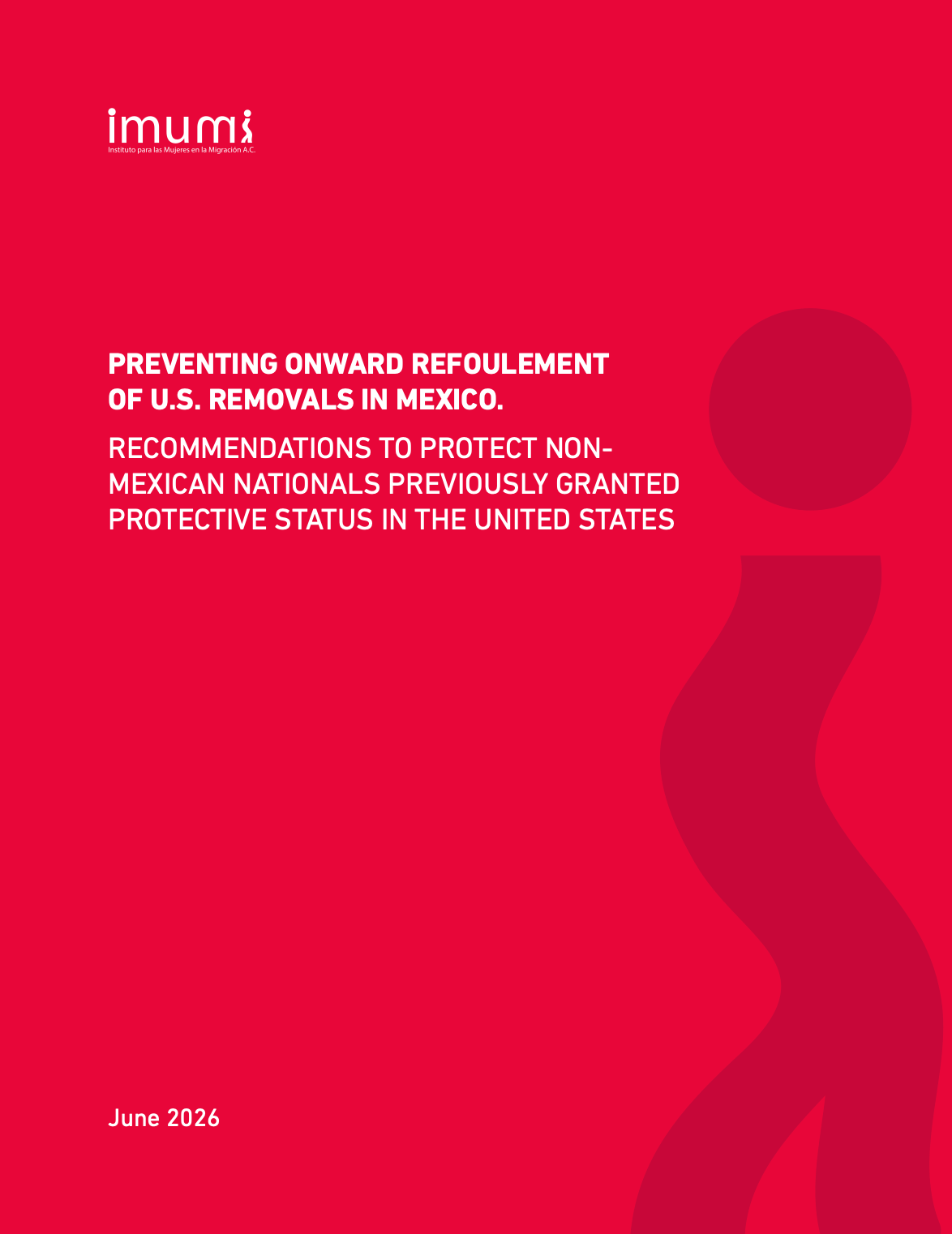
To learn more about IMUMI’s work, check out its publications page. For example, IMUMI’s June 2026 report, “Preventing Onward Refoulement of U.S. Removals in Mexico,” documents chain refoulement, or cases where a person deported from the United States to Mexico is then removed by Mexico to a country where they face harm. Its reports are available in English and Spanish. Follow them at @IMUMIDF on X and @imumi_mx on Instagram.
Mexico City Wrap-Up
Mexico City was everything people say it is. I am grateful to Claudia, Víctor, Nancy, Camelia, Selene, Gretchen, and everyone else who made time to talk with me, share a meal, or walk me across campus when I was lost. The hospitality was extraordinary, and I left with new colleagues, new questions, and every intention of coming back.
I wanted to make the same commitment publicly that I made to the groups I met with. I need to do a better job of talking about data on Mexico specifically in order to support the important research, reporting, and advocacy efforts going on there right now. Mexico isn’t just any country; it has a unique and longstanding connection to the United States. The U.S. has drawn on migrant labor for years while treating Mexico’s citizens as expendable. We are two countries that are so close and yet so far apart. U.S. researchers and reporters need to work together with our colleagues to the south. We have much to learn from each other.
Trips like this remind me how much I enjoy taking this work on the road. Some of my favorite conversations happen in a seminar room or around a lunch table, where people bring their own questions about what the data can tell them. If your university, organization, or newsroom is interested in hosting a workshop, talk, or training on immigration enforcement data, please reach out. I would love to hear from you.
Mexico City is an incredible place. Beautiful. Great people. Wish I could return there to work with the people you spoke with. (Know who I could contact?) I lived there for 7 years and another 5 in the 'province.' Great work Austin!
Thanks for your work Austin - so insightful, fresh and full of compassion. As I seek more understanding, you always and carefully point me in new and helpful directions.